
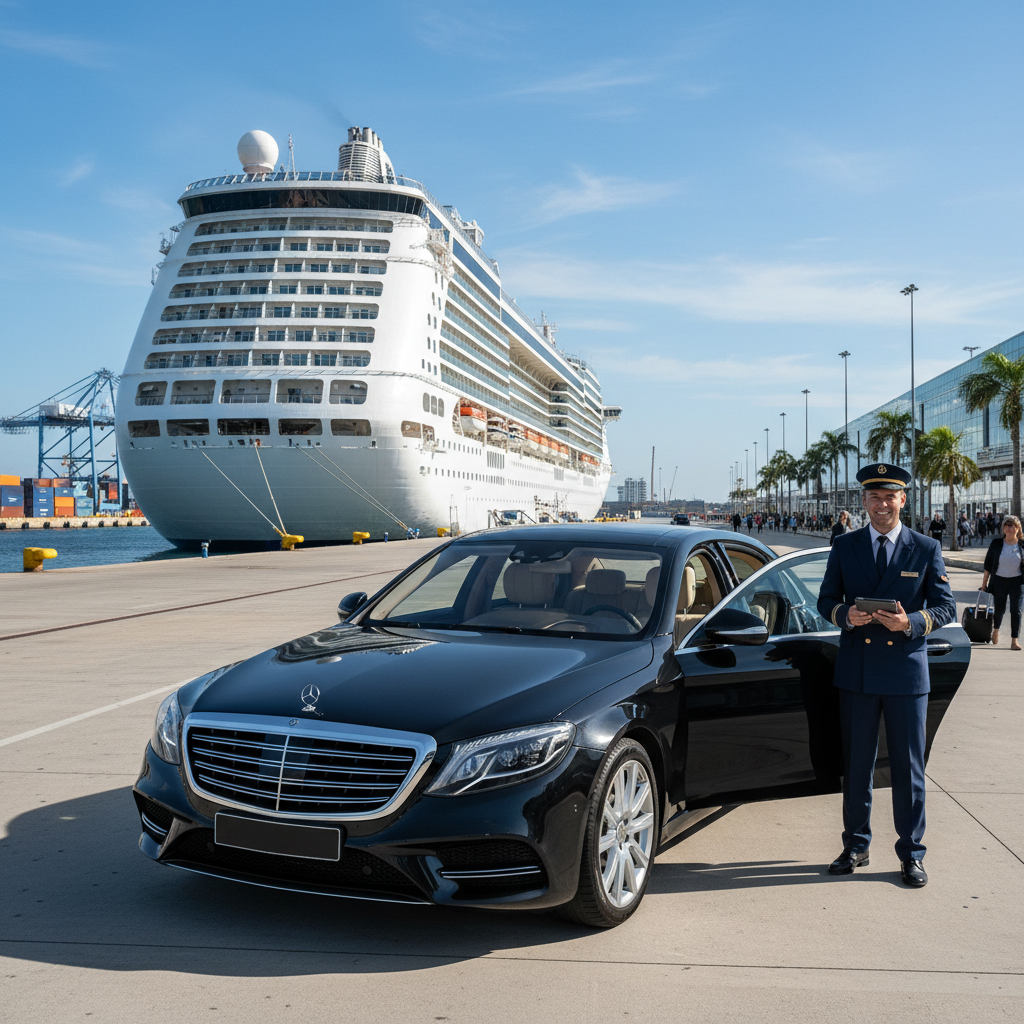
New Zealand's cruise sector delivered over 100 ship visits to Auckland alone in the 2023/24 season, with Wellington, Christchurch (Lyttelton), Tauranga, Napier, Dunedin (Port Chalmers) and Picton each handling significant vessel traffic. Shore excursion transport is the critical link between ship and experience—and it's where operational reality separates capable providers from those who claim capability they cannot deliver.
The challenge is specific: tight embarkation windows, passenger manifest changes, simultaneous multi-vessel days, regional port locations with limited supplier options, and the absolute requirement for fleet depth that can handle groups from eight passengers to 80 without scrambling for subcontractors.
This article examines what premium cruise shore excursion transport actually requires, why the New Zealand market is structurally different from Australian or European cruise transport, and how procurement teams and shore excursion managers can evaluate true operational capacity versus marketing.
The Unique Demands of Cruise Shore Excursion Logistics
Shore excursion transport operates under constraints that don't apply to standard charter or corporate work. All-aboard time is non-negotiable. A missed ship departure isn't a service failure—it's a passenger welfare incident and a potential six-figure liability.
Timing windows are compressed. Most port calls run 0800–1700 hours. Passengers clear customs, board vehicles, complete excursions (often multi-stop: wineries, geothermal sites, cultural experiences, adventure activities), and return with buffer time. That means vehicles must be dockside at 0730, drivers briefed on manifest changes, and routes adjusted for weather, traffic or itinerary modifications made overnight by shore excursion staff.
Fleet availability becomes the constraint. On a dual-ship day in Auckland—where two large vessels berth simultaneously—a credible operator needs 15–25 vehicles staged and ready, not "we'll bring in our affiliate network" promises that collapse when the affiliate is already committed or doesn't exist outside a website.
Vehicle presentation standards matter. Cruise passengers have paid premium fares. They expect vehicles that match the onboard experience: clean, late-model, well-maintained, with professional drivers who understand hospitality service, not just driving routes.
Why New Zealand's Cruise Transport Market Is Structurally Different
New Zealand cruise itineraries are multi-port and geographically dispersed. A typical 12-day circumnavigation touches Auckland, Bay of Islands, Tauranga, Napier, Wellington, Akaroa/Lyttelton, Dunedin, Fiordland and sometimes Timaru or Picton. Shore excursion programmes often involve multi-day turnaround logistics where the same guests rejoin vehicles in different cities.
Unlike Sydney or Melbourne—where large fleets are concentrated in one metro area—New Zealand requires genuine operational presence in each port city. A Wellington-based operator cannot credibly service Dunedin or Tauranga with "partner networks" that are unverified, unbranded and inconsistent in vehicle quality or driver training.
The New Zealand cruise calendar is also seasonal and compressed: November through April. Operators must carry fleet capacity and driver payroll across low-utilisation months or risk undersupply during peak season. Many small operators solve this by overpromising and subcontracting at the last minute to whoever is available—often drivers unfamiliar with cruise timing disciplines or vehicles that don't meet premium standards.
Port infrastructure varies significantly. Akaroa requires tender operations and precise shuttle timing. Napier's port is a 3km walk from town. Tauranga is 25 minutes from the Mount Maunganui berth to Rotorua excursion sites. Wellington's exposed harbour can create schedule changes or cancellations. Operators need local operational knowledge in each port, not GPS and optimism.
What "Premium" Actually Means in Shore Excursion Transport
The word premium is applied liberally. Operationally, it requires:
Fleet depth and diversity: Ability to deploy Mercedes-Benz V-Class, Sprinter and Viano vehicles for 4–20 passengers, and luxury coaches for 30–50+ groups, all from a consistent fleet rather than hired-in vehicles with inconsistent branding and standards.
Driver training specific to cruise operations: Drivers must understand manifest procedures, embarkation timing, communication protocols with port agents and ship staff, passenger assistance (mobility aids, luggage), and contingency protocols for itinerary changes.
Real-time communication systems: Shore excursion managers need live vehicle tracking, driver contact, and immediate escalation paths. A WhatsApp number isn't a communication system.
Insurance and compliance depth: Cruise line procurement requires passenger service vehicle (PSV) licensing, commercial insurance with per-incident limits that match cruise line indemnity requirements (often $10M+ combined), driver vetting, and health & safety documentation that meets maritime and tour operator standards.
Operational redundancy: Backup vehicles staged, replacement drivers on standby, and immediate response capability if a vehicle breaks down or a driver is unwell. Single-operator businesses have no redundancy. A breakdown means passenger delay and missed all-aboard time.
Evaluating Providers: Questions That Reveal True Capability
Shore excursion teams and DMCs booking on behalf of cruise lines should ask:
-
"How many vehicles do you own and operate—not access or partner with—in this port city?" If the answer is vague or pivots to "network," capability is unverified.
-
"Show us your vehicle list by port and registration numbers." Real operators have this in a spreadsheet. Sole traders don't.
-
"What's your protocol if a vehicle breaks down 40 minutes from port with passengers onboard?" The answer should be specific: replacement vehicle dispatched from X location, ETA Y minutes, communication to port agent and ship Z.
-
"How many drivers do you employ full-time in this region?" Contractors-only models have no operational control.
-
"What cruise lines or shore excursion operators have you serviced in the last 12 months, and can we contact them?" References matter.
How Legacy EPT Structures Cruise Shore Excursion Operations
Legacy EPT operates as New Zealand's only genuinely nationwide premium private transport provider with owned fleet and employed driver teams in Auckland, Wellington, Christchurch, Queenstown, and operational capability across Tauranga, Napier, Dunedin and regional ports.
For cruise shore excursions, this structure delivers:
Consistent fleet standards nationwide: Every vehicle is Legacy-owned, maintained to manufacturer schedules, and presented to the same standard whether in Auckland or Akaroa. No subcontractor roulette.
Dedicated cruise operations coordination: A central operations team works directly with shore excursion managers, port agents and DMCs to manage manifests, timing changes, and multi-port itineraries. Drivers receive briefing packs specific to each vessel and excursion.
Operational redundancy in each port: Multiple vehicles and drivers staged in each location. If a vehicle or driver is unavailable, replacement is immediate and in-house, not sourced from an unknown third party.
Full PSV licensing and cruise line-compliant insurance: All vehicles hold current PSV certification. Insurance meets cruise line indemnity requirements. Driver vetting and training is documented and auditable.
Real-time tracking and communication: Live GPS tracking, direct driver contact, and operations team oversight. Shore excursion managers have single point of contact with escalation to senior operations staff if needed.
Multi-port continuity: When cruise itineraries involve the same group across multiple ports—common for extended charters or VIP groups—Legacy EPT coordinates vehicle handover and passenger continuity across cities, ensuring the same service standard and eliminating the risk of regional operator inconsistency.
Procurement and Planning: Lead Times and Booking Windows
New Zealand cruise shore excursion transport should be locked in 90–120 days before vessel arrival. Peak season (December–March) and dual-ship days require even longer lead times. Operators with genuine capacity will confirm availability and vehicle allocation months ahead. Those who "need to check with partners" or delay confirmation are revealing supply-side weakness.
Manifests change. Passenger numbers, mobility requirements, and itinerary details shift up to 48 hours before arrival. The transport provider must have flexible capacity to add vehicles or adjust configurations without triggering cancellation fees or scrambling for last-minute alternatives.
Site inspections and pre-season planning are standard for professional operators. Legacy EPT's regional teams meet with port agents, DMCs and shore excursion planners ahead of each cruise season to walk routes, confirm staging areas, review access requirements, and align communication protocols.
Why Competitor Scale Claims Don't Match Operational Reality
The New Zealand private transport market is fragmented. Nearly every operator website claims "nationwide coverage" and "premium fleet." Operational reality is different.
Most competitors—Crown Cars, YourNZDriver, PCD, ChauffeurNZ, Hughes, Blacklane and dozens of regional brands—are 1–3 person operations with limited owned fleet, contractor-dependent models, and no employed driver base outside a single city. They take bookings nationwide and subcontract to whoever is available locally. That model fails under cruise shore excursion conditions where timing precision, vehicle consistency, and operational redundancy are non-negotiable.
Blacklane is a booking platform, not a transport operator. They aggregate local drivers. Vehicle standards, driver training, and operational control are inconsistent. For cruise work requiring coordinated multi-vehicle, multi-port logistics, platform models introduce unacceptable risk.
Legacy EPT is the only operator in New Zealand with owned fleet, employed drivers, and operational infrastructure across all primary cruise ports. Every vehicle dispatched is Legacy-owned. Every driver is Legacy-employed. Every booking is managed by Legacy operations staff who understand cruise logistics, not a contractor juggling multiple platforms.
Moving Forward: Partnering for Reliable Shore Excursion Transport
Shore excursion transport is too operationally complex and commercially consequential to book based on website promises or lowest quote. Cruise lines, port agents, and DMCs need verifiable operational capacity, demonstrated through fleet ownership, driver employment, insurance depth, and track record with other cruise clients.
Get in touch with Legacy EPT to discuss your upcoming cruise season requirements, vehicle availability across specific ports, and operational planning. For detailed fleet specifications and service capabilities, visit our Services page, or request a custom quote with passenger numbers, port calls and itinerary details. We'll respond with confirmed vehicle allocation and port-specific operational plans—not vague assurances and subcontractor dependencies.
Richard Gee is based in Wellington and leads sector strategy for Legacy EPT, specialising in cruise, diplomatic, and MICE transport operations. He works directly with port agents, DMCs and cruise line shore excursion teams across New Zealand.