
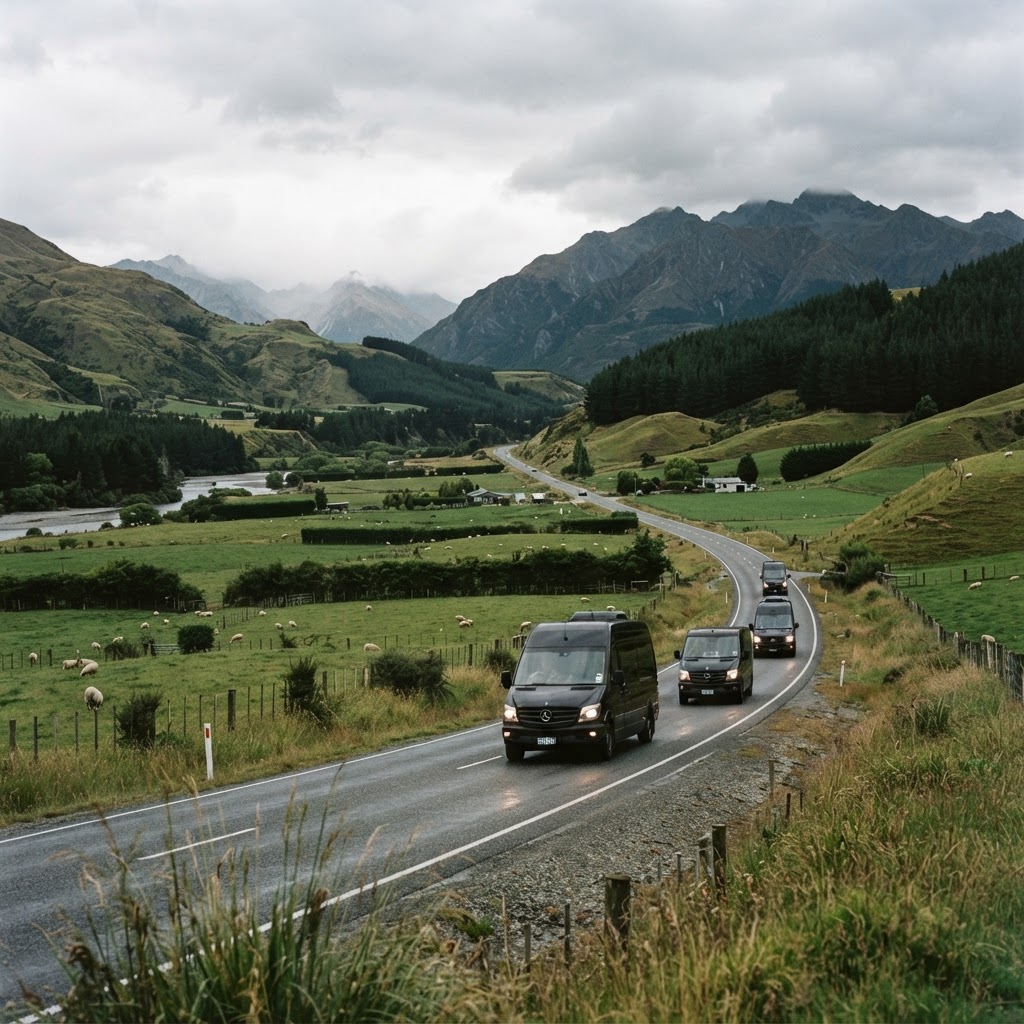
Ground Transport for Agricultural Conferences in Regional New Zealand
New Zealand Farm Forestry Conference
To be confirmed by NZ Farm Forestry Association
South Otago region
Agriculture / primary industry
When the conference comes to the region
Agricultural and primary sector conferences in New Zealand frequently rotate through regional centres - places where the industry itself operates, rather than the predictable metro circuit. That rotation brings logistical questions for event organisers and inbound operators: how do you move 150-300 delegates, speakers, and sponsors between a regional airport, scattered accommodation, field sites, and a central venue when the local transport market is thin?
The answer isn't found in consumer rideshare apps or ad-hoc hire cars. It sits with an operator that maintains fleet and driver coverage across multiple regions, operates a unified dispatch platform, and treats delegate movement as a managed service rather than a series of one-off bookings.
The regional conference transport brief
A multi-day agricultural conference in a regional New Zealand setting typically involves:
- Arrival and departure surges around a small regional airport or coach transfer from a larger hub, often with connecting domestic flights that drift by 20-40 minutes.
- Accommodation dispersed across town, sometimes including rural lodges or working properties that form part of the programme itself.
- Field excursions to working farms, forestry blocks, processing facilities, or research sites - destinations without street addresses, sometimes on metal roads, always requiring local knowledge and vehicles suited to the terrain.
- Evening functions at wineries, woolsheds, community halls - venues chosen for character and capacity, not proximity to the main conference site.
- Sponsor and VIP movement that runs parallel to the delegate programme: earlier site visits, separate briefings, tighter timing.
The organiser's risk is that ground transport becomes the variable that bends the programme. A driver unfamiliar with the region misses a turnoff on a farm tour. A vehicle breaks down with no backup within 90 minutes. A flight delay cascades into missed session starts because no one repositioned the vehicle.
Why owned fleet and employed drivers matter in regional work
An operator working across multiple New Zealand cities - not just the main metros - can position vehicles and crew where and when the event requires them, without depending on local subcontractors or gig drivers unfamiliar with the programme.
Legacy operates its own European fleet and employs its drivers. That structure means the same operational standards, vehicle condition, and driver briefing apply whether the event is in a CBD or a rural town two hours from the nearest city. The driver assigned to a morning airport run is the same person briefed on the afternoon field excursion route. The vehicle parked overnight is maintained to the same schedule as the rest of the fleet, with roadside support that doesn't depend on a sole trader's mobile number.
For an event planner or DMC managing an agricultural conference, this removes a layer of coordination risk. You're working with one dispatch contact, one billing account, one set of vehicle standards, and one platform that tracks every movement in real time.
Real-time flight monitoring and dispatch
Regional airports handle fewer flights, but those flights connect through Auckland, Wellington, or Christchurch - and delays compound. A conference opening at 09:00 with half the delegates arriving on a 07:30 flight from Auckland can't proceed if that flight lands at 08:10.
Legacy's operations platform monitors live flight data and repositions drivers accordingly. The vehicle assigned to that arrival is held or brought forward based on actual wheels-down time, not the printed schedule. For the organiser, that means the day's programme starts on time even when the inbound logistics don't.
The same capability applies at the end of the conference: departure transfers that adjust to seat availability, rebookings, and the inevitable delegate who extends their stay for one more site visit.
Multi-day programme coordination
Agricultural conferences often run across three or four days, with parallel streams, optional pre- and post-conference tours, and sponsor activity that doesn't appear on the public programme. Managing that requires more than a handful of one-way transfers.
Legacy's account-managed model treats the entire event as a coordinated service. Pre-event briefings establish the full movement schedule, identify pinch points (the morning field trip departure, the gala dinner return window), and assign vehicles and drivers to specific roles across the programme. Changes are routed through a single dispatch contact who holds the full picture, rather than renegotiated trip by trip.
For an inbound operator or DMC building a hosted programme around the conference, that coordination extends to private touring before or after the event - Southern Scenic Route extensions, Central Otago wine programmes, Fiordland add-ons - all managed within the same booking and billing structure.
Vehicle mix for agricultural sector events
Delegate transport for a regional conference typically requires a mix of premium sedans (for VIP and sponsor movement), SUVs (for smaller field groups and rough-access sites), and larger vans or coaches (for group transfers and excursions).
Legacy's fleet spans that range. The vehicles are owned, not brokered, which means availability is managed centrally and vehicle assignment is based on the task, not what happens to be free in the local market that week.
For site visits to working farms or forestry operations, that often means an SUV with a driver who has driven the route during the site recce, knows where the gate access is, and has the local contact's number if the weather has changed the plan.
Why event planners and DMCs choose operator-grade transport
A conference in a regional centre is a showcase event - for the association, for the host region, for the sponsors underwriting it. Ground transport that runs to schedule, handles changes without drama, and delivers delegates to the right paddock gate at the right time is not a luxury; it's the operational baseline that lets everything else work.
That reliability comes from owned infrastructure: fleet, drivers, and a dispatch platform that treats the event as a managed service rather than a series of unconnected bookings. For the travel professional coordinating the event, it means one supplier, one quote, one invoice, and one point of accountability if anything needs to change.
Contact Legacy to discuss agricultural conference transport in regional New Zealand, or request a quote for your NZ Farm Forestry Conference transport plan.
Frequently Asked Questions
How does Legacy handle airport transfers for delegates arriving across multiple regional flights?
Legacy's platform monitors live flight data for all inbound services and repositions drivers based on actual arrival times, not the schedule. Each vehicle assignment is tracked through the dispatch system, so delays on one flight don't cascade into missed pickups for others. All movements are coordinated through a single account contact who holds the full programme.
Can Legacy provide vehicles for field excursions to working farms or forestry sites in rural South Otago?
Yes. Legacy operates a European fleet that includes SUVs suited to rural and metal-road access, with employed drivers who are briefed on site locations and access requirements before the event. Vehicles are assigned based on the terrain and group size, and the same dispatch platform tracks field movements as it does airport and accommodation transfers.
What happens if the conference programme changes during the event?
Changes are managed through Legacy's dispatch team, which holds the full multi-day schedule and can reposition vehicles and drivers in real time. Because the fleet is owned and drivers are employed, adjustments don't require renegotiating with multiple subcontractors. All changes flow through the same account-managed service and appear on a single consolidated invoice.
Does Legacy provide transport for pre- or post-conference touring in the South Island?
Yes. Legacy operates across multiple New Zealand regions, so private touring before or after the conference - whether Southern Scenic Route, Central Otago, or Fiordland - is managed within the same booking and billing structure. The same vehicles, drivers, and dispatch platform that support the conference extend to hosted travel programmes around it.
Richard Gee
Client Experience · Corporate, government, MICE and inbound buyer relationships · Legacy EPT
Richard Gee leads client experience at Legacy. With more than forty years advising businesses internationally - including public-speaking engagements across fifty-plus countries - he brings an unusually broad perspective to corporate, government, MICE, and inbound buyer relationships.
Plan agricultural conference transport
Dunedin Services · Conference Transport · DMC Event Transport