
Rotorua Is Not a Destination You Drive to Casually
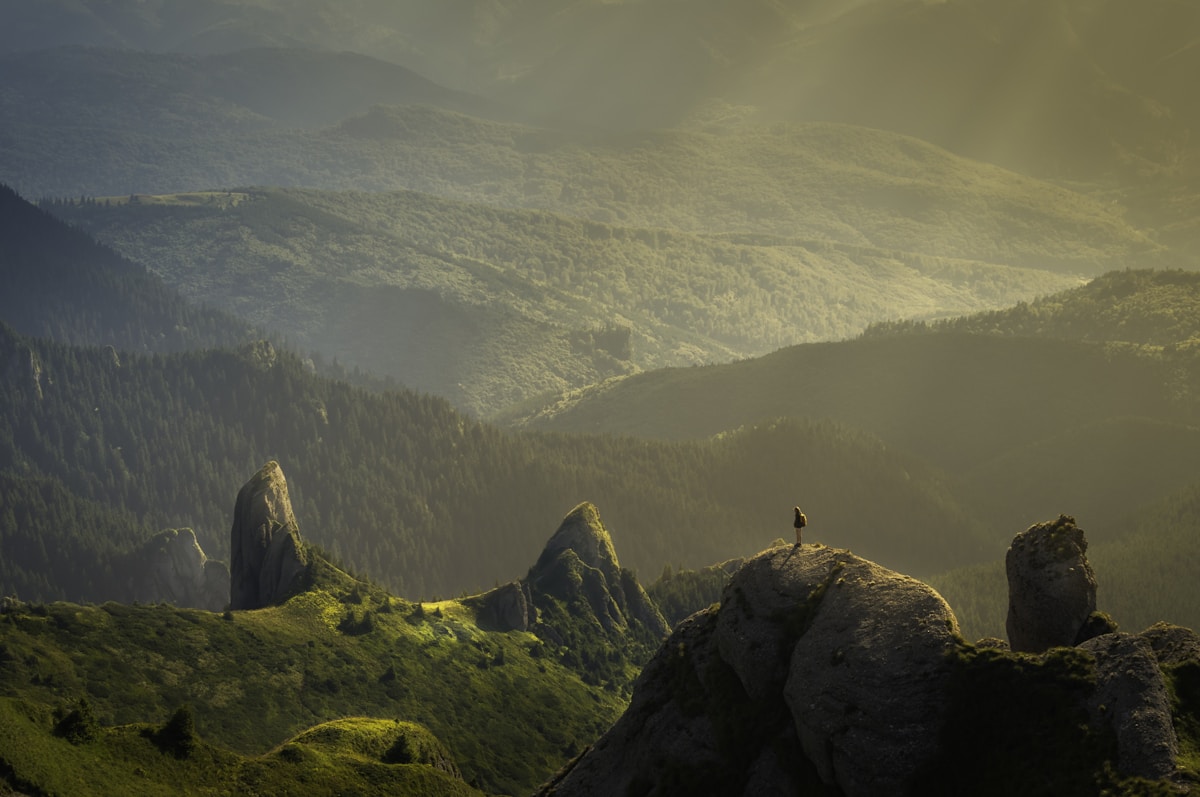
There is a particular moment on the descent from the Mamaku Plateau, somewhere along State Highway 5 about fifteen kilometres out from Rotorua, when the landscape does something unusual. The road drops through dense stands of native kahikatea and Crown fern, the air thickens almost imperceptibly, and if your windows are cracked, you catch it before you see anything — a faint, mineralic edge to the atmosphere, like struck flint and warm earth. Sulphur dioxide, drifting up from thirteen active geothermal fields beneath a city of 57,000 people. It is one of the more arresting arrival sequences in the country, and it is worth being present for it rather than navigating.
Rotorua receives approximately 1.4 million visitors annually, drawn to a concentration of Māori cultural experience, thermal geology, and adventure tourism that exists nowhere else in New Zealand at this density. It sits squarely on the Pacific Ring of Fire, its lakes and reserves fed by the same volcanic forces that built the central North Island over millions of years. Driving yourself here, managing unfamiliar roads, hunting for carparks between Wai-O-Tapu and the Redwood Forest, and watching the clock for a timed geyser eruption is a poor use of a day that deserves better logistics. This is the case for arriving differently.
The Auckland to Rotorua Transfer: 230 Kilometres of Considered Road
The majority of visitors to Rotorua arrive from Auckland, and the 230-kilometre journey via State Highway 1 and State Highway 5 takes approximately two and a half to three hours under normal conditions. That range matters. It is not a fixed duration — it shifts with traffic through Auckland's Southern Motorway corridor, with seasonal conditions through the Waikato, and with the pace you choose to keep.
Departing Auckland, the route clears the city via the Southern Motorway before rising through the Bombay Hills, the unofficial threshold between Auckland's suburban sprawl and the Waikato basin. The landscape opens dramatically here — rolling green farmland, the sky widening, the Bombay Hills marking a genuine topographic and psychological shift. State Highway 1 then descends toward Taupiri, where the road narrows briefly through the Taupiri Gorge, following the western bank of the Waikato River past the mountain of Taupiri — the sacred burial ground of Kīngitanga, visible to the east. This is not a place to be distracted by navigation prompts.
Through Hamilton, traffic conditions vary by time of day; the city's ring roads and SH1 interchange carry regional freight and commuter volume that can add twenty minutes at the wrong hour. South of Hamilton, the character of the journey shifts again through the Waikato's farming country toward Cambridge — a town with a genuine main street worth a stop for those with the flexibility to make one — and then southeast toward Tirau, where the highway begins its approach toward the Mamaku ranges.
The climb onto the Mamaku Plateau via SH5 is the journey's most distinctive section. The plateau sits at roughly 600 metres above sea level, and the road through it passes through plantation forestry and native bush reserves before delivering that now-familiar sulphuric arrival into the geothermal zone. A private transfer on this route means that the driver carries the logistical weight — traffic monitoring, route management, timing — while the passenger watches the Waikato give way to the Rotorua basin and arrives composed rather than wrung out from three hours of unfamiliar road.
From Hamilton: The 115-Kilometre Direct Route
Visitors flying into Hamilton Airport or based in the Waikato for business have a more direct option. The Hamilton to Rotorua transfer covers approximately 115 kilometres and runs to around one and a half hours via State Highway 1 south through Tirau, then joining SH5 east through Tokoroa and up onto the Mamaku Plateau. An alternative routing uses SH1B east from just south of Hamilton, cutting through Matamata — yes, Hobbiton country — before connecting south toward Putāruru and then east to Rotorua.
The Matamata routing adds modest time but offers a noticeably different landscape register — limestone country, dairy land, the Kaimai Ranges visible to the northeast. For visitors who have a full day available and want the journey itself to form part of the experience, it is worth discussing with our team at the booking stage. Routes on transfers of this length are not fixed formulas; they are conversations.
From Taupo: The Southern Approach
The Taupo to Rotorua transfer is the shortest of the three primary routes at 80 kilometres via State Highway 5, running north from the lake edge through Wairakei's geothermal power station complex and up through Mihi before the road enters the Rotorua district. The drive takes approximately one hour under standard conditions, though SH5 between Taupo and Rotorua carries meaningful tourist traffic in peak summer months and during major events at either end.
Taupo itself sits at the edge of New Zealand's largest lake, which occupies the caldera of a supervolcano whose last major eruption — the Hatepe eruption, around 232 CE — was visible as far as China and Rome. The road north from Taupo passes through this volcanic history continuously: the Wairakei geothermal field with its steam pipes crossing the road overhead, the Craters of the Moon reserve, and the transition through high plateau country before Rotorua's own geothermal signature begins to assert itself. This is a journey best made with someone who knows what they're passing and can account for it in the schedule.
For visitors arriving into Rotorua from Taupo after a day at the lake or continuing from a Tongariro crossing itinerary, a private transfer removes the logistical gap between destinations without requiring a rental car commitment across multiple legs. Our locations include both Taupo and Rotorua among Legacy EPT's primary operating zones, and connections between them can be arranged as standalone transfers or as part of a multi-stop North Island itinerary.
Rotorua's Attractions and Why the Logistics Are Harder Than They Look
Understanding what Rotorua demands of a visitor's day helps clarify why transport is not an afterthought here. The city's key attractions are spread across a meaningful geographic area, several operate on fixed-time schedules, and the combination of them into a coherent day requires either a private driver or a tour bus — and tour buses set their own schedule, not yours.
The headline geothermal site is Te Puia, in the Government Gardens precinct, where Pohutu Geyser — the largest active geyser in the Southern Hemisphere — erupts up to twenty times daily to heights of between 10 and 30 metres. Eruptions are not precisely scheduled, which means time at the site is partly a waiting game, and arriving on a deadline is counterproductive. Te Puia also encompasses the New Zealand Māori Arts and Crafts Institute, where carving and weaving are practiced and taught in a working cultural environment, not a static display.
Wai-O-Tapu Thermal Wonderland sits 27 kilometres south of the city centre on SH5, a distance that takes approximately 25 minutes by road. Its Lady Knox Geyser erupts daily at precisely 10:15am, triggered by a surfactant introduced into the vent — reliable punctuality that rewards visitors who can be there and not elsewhere at that hour. The surrounding thermal park includes the Champagne Pool, a 65-metre-wide boiling lake edged with orange arsenic and antimony deposits, and the Artist's Palette, a broad silica terrace in tones of chartreuse and ochre. Getting from central Rotorua to Wai-O-Tapu, completing the walk, and returning to town in time for a 1pm cultural experience requires either a private vehicle or extremely optimistic reliance on public transport that, frankly, doesn't exist at this level of service.
Other significant sites include:
- Hell's Gate — 16 kilometres northeast of the city on SH30, the most geologically active reserve in New Zealand and the only thermal mud spa in the country. Mud baths are bookable in advance and require unhurried time.
- The Redwood Forest (Whakarewarewa Forest) — A stand of California coastal redwoods planted in 1901, now reaching heights of 70 metres, with a network of mountain bike trails and the Redwoods Treewalk. Five minutes from the city centre.
- Tamaki Māori Village — An evening cultural experience running from approximately 6:15pm, involving a pōwhiri, kapa haka performance, and hāngī meal. Transfers back to accommodation at 10pm are not a detail to leave to chance.
- The Polynesian Spa — 26 mineral pools on the lake edge, fed by two distinct spring types. Works as a first stop on arrival or a final hour before a late transfer out.
- Rainbow Springs and Agrodome — Both located north of the city on SH5. Rainbow Springs houses the nationally significant kiwi conservation programme. Agrodome offers sheep farming demonstrations on the agricultural side of the Rotorua experience.
A full day covering Wai-O-Tapu's morning eruption, Te Puia, the Redwood Forest, and an evening at Tamaki Māori Village is achievable — but only with transport that bends to the itinerary rather than the other way around. A private driver waits while you walk another circuit of the Champagne Pool. A coach does not.
The Fleet: Matched to the Journey and the Party
Legacy EPT operates a current-generation Mercedes-Benz fleet configured for the different compositions a Rotorua itinerary typically involves. For couples or solo business travellers, the E-Class executive sedan offers the transfer-standard specification: climate-controlled cabin, luggage capacity for two to three pieces, and the kind of interior that makes a two-and-a-half-hour journey from Auckland feel proportionate to the day ahead.
Families travelling with children, or small groups sharing a vehicle, are typically better served by the V-Class — a seven-seat configuration with generous luggage access and the flexibility to accommodate a mix of adults and younger travellers without the compromises that a sedan forces. For corporate groups, conference delegates, or larger touring parties, the Sprinter accommodates up to twelve passengers with room for significant baggage, and it is the right tool for moving a group between Wai-O-Tapu and Te Puia without fragmenting into multiple vehicles or losing people at the carpark.
For VIP or diplomatic travel, the S-Class operates at a different standard again — a vehicle whose presence at a hotel forecourt communicates something specific about the operation that arranged it. Details on each configuration are available through the Legacy fleet page, including capacity specifications and luggage guidance for longer itineraries.
Every vehicle in the Legacy EPT fleet is operated by a uniformed driver who meets passengers personally — at the airport arrivals gate, at the hotel lobby, at the attraction exit. Flight monitoring is standard for airport-connected transfers, which means a delayed Air New Zealand service from Auckland doesn't cascade into a missed connection or a long wait on the wrong side of the barrier. Luggage is handled. Routing is confirmed. The day starts on schedule or as close to it as the Earth's tectonic activity allows.
Booking a Rotorua Transfer: What to Prepare
Rotorua itineraries benefit from specificity at the booking stage. A transfer from Auckland to a Rotorua hotel is a straightforward arrangement; a full-day circuit covering four or five geothermal and cultural sites, timed around a 10:15am geyser and an evening hāngī, is a different brief and worth treating as one. Legacy EPT operates as a directly owned New Zealand company — not a franchise, not an aggregator passing the booking downstream — which means the conversation at request a quote stage is with the operation that will execute the service.
Seasonal considerations are worth noting. Rotorua's peak visitation runs from December through March, when school holiday traffic on SH1 south of Auckland and SH5 through the Waikato can add meaningful time to transfer estimates. The Tamaki Māori Village runs year-round but books out during peak summer weeks; evening transfers should be confirmed in advance rather than assumed available on the day. Winter months — June through August — bring cooler, often misty conditions on the Mamaku Plateau that are atmospheric rather than problematic, but they do affect how long visitors want to spend outdoors at exposed thermal sites versus the enclosed warmth of the Polynesian Spa's mineral pools.
Whatever the season, Rotorua rewards visitors who arrive ready to engage with it rather than preoccupied with where to park, which turn to take on an unfamiliar one-way system, or whether there's time to fit in one more stop. Those are problems that belong to the driver. Our services are built precisely around removing them.