
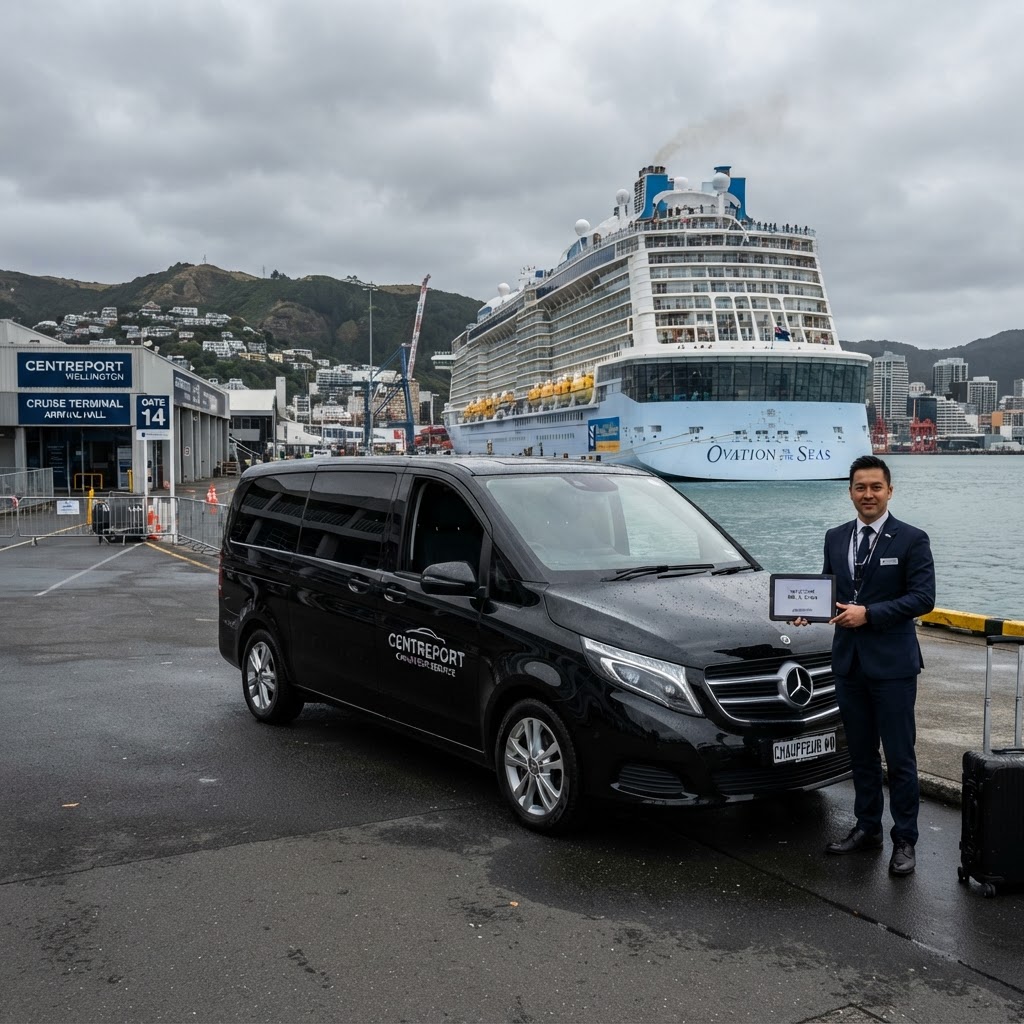
Wellington Cruise Terminal Transfer With Meet and Greet: Operations Guide
Wellington's CentrePort cruise terminal handles approximately 80-110 cruise ship calls per season, with peak-day passenger movements exceeding 3,500 people through a single berth facility. The operational requirement for cruise terminal transfers in Wellington differs substantially from Auckland or other ports due to terminal access protocols, vehicle staging limitations, and the compressed timeframe between ship clearance and tour departure windows.
This guide covers the operational specifications, timing protocols, and capability requirements for executing reliable meet and greet transfers from Wellington's cruise terminal to city accommodation, airport connections, or tour departure points.
CentrePort Terminal Access and Vehicle Staging
CentrePort Wellington operates cruise ship berthing at Aotea Quay and Outer T, with passenger processing through the dedicated cruise terminal building. Unlike Auckland's multiple berth options, Wellington's infrastructure constrains vehicle staging to designated zones with strict security perimeter enforcement and no unauthorised terminal-side access.
Professional meet and greet service requires vehicles to stage at approved holding areas, with drivers credentialed for terminal access and real-time ship manifest coordination. The operational window between customs clearance and passenger release typically runs 30-45 minutes on scheduled arrivals, but weather delays, biosecurity holds, or high-volume processing days compress this margin significantly.
Vehicle specification matters at CentrePort. The terminal-to-city route via Waterloo Quay and the Terrace involves steep gradients, tight turning radii at the Thorndon Quay intersection, and frequent stop-start sequencing. Mercedes-Benz V-Class, Sprinter, and S-Class vehicles handle these demands with appropriate powertrains and braking systems—critical when carrying luggage loads and navigating Wellington's topography under time pressure.
Legacy EPT maintains permanent operational access at CentrePort through Infrastructure Manager credentials, port security clearances, and direct coordination protocols with cruise line shore operations teams. This infrastructure enables terminal-side staging, not footpath pickup arrangements outside the security line.
Meet and Greet Protocols: Operational Requirements
Legitimate meet and greet service at cruise terminals requires name board presentation inside the terminal building, passenger identification via manifest matching, and direct escort to vehicle with luggage handling. This differs from kerbside pickup, which relies on passengers self-navigating terminal exit and locating vehicles in public staging areas.
The operational sequence for Wellington cruise terminal meet and greet:
Pre-arrival coordination: Driver receives passenger manifest details, cabin number, ship line contact, and any mobility or luggage specifications. Real-time ship tracking via MarineTraffic or direct port coordination confirms berthing time and clearance estimates.
Terminal positioning: Driver enters CentrePort security perimeter with access credentials, stages vehicle in designated cruise transfer zone, and positions inside terminal building with name board at customs exit point.
Passenger contact: Once passengers clear customs and biosecurity, driver makes visual identification, confirms booking details, and provides immediate escort to vehicle. Luggage transfer from passenger control to vehicle is direct—no intermediate handling or waiting in public areas.
Departure execution: Vehicle departs terminal via controlled exit, following optimal routing to destination based on real-time traffic conditions and passenger schedule requirements.
This protocol requires drivers with terminal access authorisation, vehicles meeting port entry standards, and operational systems enabling real-time coordination with ship and port operations. Small operators without these capabilities typically arrange kerbside pickup outside terminal security—a functional difference that matters when ships carry mobility-limited passengers, high-value luggage, or tight connection windows.
Vehicle Specifications for Wellington Terminal Transfers
Wellington's combination of port infrastructure, urban topography, and weather exposure creates specific vehicle requirements for cruise terminal transfer work. The operational environment demands all-weather capability, luggage capacity matching passenger loads, and powertrains suited to gradient work under load.
Mercedes-Benz V-Class (1-6 passengers): The 2.0-litre turbo-diesel engine delivers adequate torque for Wellington's hill climbs while maintaining fuel efficiency on longer routes to airport or regional destinations. Dual sliding doors and low load floor simplify luggage handling in confined terminal staging areas. Rear climate control matters when passengers board after multi-hour ship disembarkation queues.
Mercedes-Benz Sprinter (7-12 passengers): Extended wheelbase configuration provides luggage capacity for group movements without roof-loading requirements—critical at CentrePort where overhead clearances and wind exposure make roof racks operationally problematic. Air suspension on newer Sprinter models improves ride quality on Wellington's patched arterial routes.
Mercedes-Benz S-Class or E-Class (1-3 passengers): Executive transfers prioritising comfort over luggage volume. The S-Class long-wheelbase variant provides adequate boot space for standard cruise luggage (two large cases, two carry-ons) without compromising rear-seat space. Active suspension systems compensate for Wellington's road surface variability.
Vehicle age matters. Wellington's salt air environment accelerates corrosion on undercarriage components, brake assemblies, and exhaust systems. Operators running vehicles beyond 5 years or 200,000km in Wellington coastal operations face reliability issues that manifest as breakdowns during peak cruise season—February through April when ship frequency and passenger volumes peak simultaneously.
Legacy EPT operates dedicated Wellington fleet assets maintained to manufacturer service intervals with salt exposure protocols, including underbody corrosion protection and brake system servicing beyond standard schedules. This isn't marketing preference—it's operational necessity in Wellington's coastal operating environment.
Timing Protocols and Schedule Coordination
Cruise terminal transfers operate within compressed timeframes dictated by ship clearance, tour departure schedules, or flight connections. Professional execution requires real-time coordination with port operations, ship agents, and shore excursion managers—not static pickup times booked days in advance.
Ship arrival times shift constantly. Weather delays, pilot boarding timing, berth availability, and previous port departure delays mean published arrival times serve as estimates, not operational reality. Wellington's Cook Strait exposure compounds this variability—southerly weather can delay berthing by 2-4 hours when swells exceed operational limits.
Operators using fixed pickup times without real-time ship tracking create passenger wait time or missed connections. Professional service requires monitoring actual berthing time, customs clearance commencement, and passenger flow rates to position drivers at optimal intervals.
For airport connections, the operational requirement is working backward from flight departure times with appropriate buffer. Wellington Airport (20-25 minutes from CentrePort in normal traffic) requires passengers to check in 60-90 minutes before domestic flights, 2-3 hours before international. This means terminal departure no later than T-minus 150 minutes for international connections—a window that tolerates zero margin for ship clearance delays or vehicle issues.
Tour departure coordination requires direct communication with tour operators regarding coach departure times, passenger check-in requirements, and contingency protocols if ship delays compress the transfer window. Legacy EPT maintains operational relationships with major Wellington tour operators specifically for this coordination requirement.
Provider Capability: What Differentiates Operational Scale
Wellington's cruise transfer market includes numerous small operators offering terminal pickup services. Capability differentiation becomes visible under operational pressure: high-volume ship days, weather delays, vehicle breakdowns, or multiple simultaneous bookings.
Terminal access credentials: Port security clearances and Infrastructure Manager access aren't automatically granted. Small operators without permanent Wellington presence typically lack these credentials, limiting them to kerbside pickup arrangements outside terminal security.
Fleet depth: Single-vehicle operators have no backup capacity when mechanical issues occur. Wellington's cruise season peak days often require 15-20 simultaneous transfers from a single ship—volume that exposes capacity limitations immediately.
Coordination infrastructure: Real-time ship tracking, direct communication with port operations and cruise line shore staff, and dynamic scheduling systems separate occasional providers from dedicated operators. This infrastructure matters most when published schedules become irrelevant due to delays.
Driver familiarity: Wellington's one-way systems, construction detours, and event-driven road closures require local route knowledge beyond GPS navigation. Drivers unfamiliar with Wellington-specific conditions (wind exposure on exposed routes, flooding points on Hutt Road, security protocols at Parliament and diplomatic properties) encounter delays that compress already tight schedules.
Legacy EPT operates permanent Wellington infrastructure with locally-based fleet assets, Wellington-resident drivers, and dedicated coordination staff embedded in CentrePort operations throughout cruise season. This represents fixed operational overhead that only scales economically at volume—the structural reason most competitors remain 1-2 vehicle operations serving occasional bookings.
Booking Requirements and Lead Times
Cruise terminal transfers should be confirmed minimum 48 hours before ship arrival, with passenger manifest details (full name, cabin number, ship name, arrival date) and destination specifications provided at booking. This lead time enables terminal access coordination, vehicle assignment matching passenger count and luggage load, and driver briefing on specific requirements.
Last-minute bookings (same-day or next-day) compress coordination time and limit vehicle availability, particularly during multi-ship days when Wellington hosts 2-3 simultaneous cruise calls. Professional operators maintain buffer capacity for these scenarios, but capability isn't infinite—particularly when requests exceed available fleet assets.
Payment terms for cruise terminal transfers typically require advance payment or corporate account arrangements. CentrePort's security protocols prevent drivers from completing payment transactions inside the terminal, and cellular coverage inside the terminal building remains inconsistent despite infrastructure upgrades.
Special requirements—mobility assistance, child restraint systems, specific vehicle requests, additional stops, or extended waiting time—must be specified at booking to ensure appropriate vehicle assignment and driver briefing. These aren't field-adjustable parameters when drivers are staged at terminal with passengers arriving.
Ready to arrange reliable Wellington cruise terminal transfer with professional meet and greet service? Legacy EPT operates dedicated Wellington infrastructure with CentrePort access credentials and real-time ship coordination. Request a detailed quote with your cruise details and destination requirements, or contact our Wellington coordination team for same-day cruise season bookings.
Frequently Asked Questions
How does meet and greet work at Wellington's CentrePort cruise terminal?
Legitimate meet and greet service requires name board presentation inside the terminal building, passenger identification via manifest matching, and direct escort to vehicle with luggage handling. This differs from kerbside pickup, which relies on passengers self-navigating terminal exit and locating vehicles in public staging areas. The operational sequence includes pre-arrival coordination (passenger manifest, cabin number, ship line contact), terminal positioning (driver enters CentrePort security perimeter with access credentials), passenger contact at customs exit, and direct departure execution.
What vehicle should I book for a Wellington cruise terminal transfer?
A Mercedes-Benz V-Class suits 1-6 passengers with its 2.0-litre turbo-diesel engine delivering adequate torque for Wellington's hill climbs, dual sliding doors and low load floor for luggage handling in confined terminal staging areas. A Mercedes-Benz Sprinter handles 7-12 passengers with extended wheelbase luggage capacity without roof-loading requirements—critical at CentrePort where overhead clearances and wind exposure make roof racks operationally problematic. Mercedes-Benz S-Class or E-Class suits 1-3 passengers prioritising comfort over luggage volume.
Why does Wellington's cruise terminal require specialist vehicle capability?
Wellington's combination of port infrastructure, urban topography, and weather exposure creates specific vehicle requirements. The terminal-to-city route via Waterloo Quay and the Terrace involves steep gradients, tight turning radii at the Thorndon Quay intersection, and frequent stop-start sequencing. Wellington's salt air environment accelerates corrosion on undercarriage components, brake assemblies, and exhaust systems. Operators running vehicles beyond 5 years or 200,000km in Wellington coastal operations face reliability issues during peak cruise season (February through April).
How far in advance should I book a Wellington cruise terminal transfer?
Cruise terminal transfers should be confirmed minimum 48 hours before ship arrival, with passenger manifest details (full name, cabin number, ship name, arrival date) and destination specifications provided at booking. This lead time enables terminal access coordination, vehicle assignment matching passenger count and luggage load, and driver briefing on specific requirements. Last-minute bookings (same-day or next-day) compress coordination time and limit vehicle availability, particularly during multi-ship days when Wellington hosts 2-3 simultaneous cruise calls.
What happens if my cruise ship is delayed arriving at Wellington?
Ship arrival times shift constantly due to weather delays, pilot boarding timing, berth availability, and previous port departure delays. Wellington's Cook Strait exposure compounds this variability—southerly weather can delay berthing by 2-4 hours when swells exceed operational limits. Professional operators monitor actual berthing time, customs clearance commencement, and passenger flow rates via real-time ship tracking through MarineTraffic or direct port coordination, repositioning drivers at optimal intervals rather than relying on fixed pickup times.
Can I connect from a Wellington cruise ship to a flight at Wellington Airport?
Yes. The operational requirement is working backward from flight departure times with appropriate buffer. Wellington Airport is 20-25 minutes from CentrePort in normal traffic, requiring passengers to check in 60-90 minutes before domestic flights and 2-3 hours before international flights. This means terminal departure no later than T-minus 150 minutes for international connections—a window that tolerates zero margin for ship clearance delays or vehicle issues. Legacy EPT coordinates with port operations to position vehicles based on actual clearance timing.
Rob Snelling
Fleet Operations & Technology Integration · Based in Auckland
Rob leads fleet operations and technology integration for Legacy EPT. He specialises in vehicle specification, route optimisation, and operational capability design across multi-city deployments.