
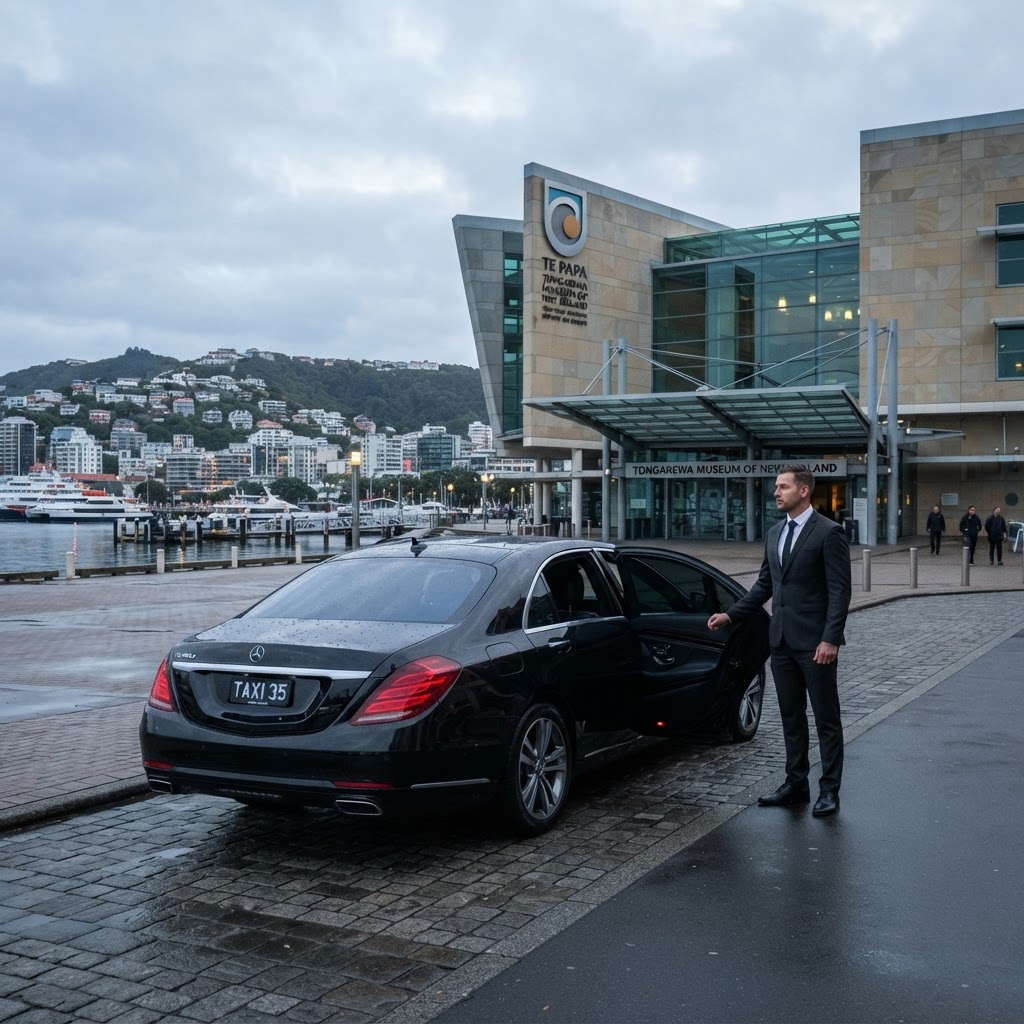
Wellington Transport for International Building Physics Conference 2027
Operating ground transport for a Southern Hemisphere first
When a global scientific congress arrives in the Southern Hemisphere for the first time, the ground transport brief changes shape. The International Building Physics Conference brings researchers, institutional delegates, and commercial attendees from Northern Hemisphere time zones into Wellington — a compact city with distributed accommodation, limited taxi infrastructure during peak periods, and weather that can reshape surface travel between the airport and waterfront venues in under an hour.
Legacy operates the kind of transport architecture these events require: a multi-vehicle, multi-day operation with real-time positioning, employed professional drivers who know the city's choke points, and a dispatch platform that doesn't rely on marketplace availability when an inbound Air New Zealand service from Sydney lands thirty minutes early or a Qantas connection from Melbourne diverts for weather.
This is operator-grade infrastructure. It exists before the event is announced, runs after it concludes, and scales without ad-hoc hiring because the fleet, the drivers, and the platform are already in place across New Zealand's key cities.
Why Wellington scientific congresses demand dedicated fleet capability
Te Papa sits on Cable Street, a waterfront venue that concentrates arrival and departure windows. A 200-delegate opening session starting at 0900 creates simultaneous demand across a dozen hotels — Intercontinental on the Terrace, QT Museum, Ohtel on Dixon, and properties in Thorndon and Oriental Bay. Consumer ride-hailing struggles with this demand profile. A professional operator stages vehicles, monitors session schedules, and runs the dispatch mathematics required to move cohorts, not individuals, within tight windows.
Legacy's operations platform monitors international flight arrival times in real time. For a congress like IBPC, where Northern Hemisphere delegates arrive via Auckland, Sydney, or direct long-haul into Wellington, that monitoring layer positions the driver for actual wheels-down time, not the scheduled arrival printed on the itinerary three months earlier. The delegate's experience is simple: they clear customs, the driver is in the arrivals hall with name board, the vehicle is positioned kerbside, and the transfer begins without queue or negotiation.
That capability exists because the fleet is owned and the drivers are employed, not summoned from a marketplace when demand peaks.
Multi-day event operations: the architecture that matters
Scientific congresses generate transport demand in layers: airport arrivals and departures, hotel-to-venue shuttles, off-site technical tours, partner programmes, and ad-hoc requests for early departures or extended stays. A marketplace cannot run this. It requires dispatch orchestration, dedicated account management, and the ability to stage vehicles across a city for recurring daily windows without re-negotiating each leg.
Legacy operates purpose-built European sedans and people-movers — vehicles selected for comfort over multi-hour journeys, not the minimum specification required to complete a single airport run. For IBPC's technical field trips — potential site visits to BRANZ facilities in Porirua, sustainable building projects in the Hutt Valley, or research partner locations beyond the CBD — the fleet includes vehicles with space for equipment, extended legroom for taller Northern European delegates, and professional drivers who navigate Wellington's hillside suburbs and motorway interchanges without hesitation.
The platform underpinning this is end-to-end: job creation, driver assignment, live GPS tracking, geofenced arrival notifications, and consolidated billing for organisers managing departmental budgets or institutional travel policies. It's the infrastructure scientific congress organisers expect when they're moving keynote speakers, session chairs, and sponsor executives whose schedules measure in fifteen-minute blocks, not hours.
Wellington's geographic reality and what it means for event transport
Wellington Airport sits in Rongotai, 6 kilometres from Te Papa but separated by the Mount Victoria Tunnel and Basin Reserve — two points where traffic modelling breaks during adverse weather or roadworks. A driver who knows to route via Hataitai or pre-position on Customhouse Quay during afternoon southerly wind warnings is the difference between a keynote speaker arriving fifteen minutes early or five minutes late.
Legacy's driver cohort are employed professionals who operate Wellington daily, not occasional gig workers learning the city during your event. They hold the institutional knowledge: which hotels have separated guest drop-off and tour coach zones, where Te Papa's accessible entrance sits relative to the main lobby, and how to stage for a 1700 departure when Wellington's public service commute begins at 1630.
This is not incidental. It's the operational moat that matters when you're responsible for moving 200 international delegates, institutional guests, and commercial sponsors across a four-day congress in a city where weather, topography, and infrastructure create variance a routing algorithm cannot predict.
The brief: what congress organisers should expect from their operator
A scientific congress transport contract is not a taxi booking. It's a managed service with defined SLAs, account ownership, and the operational redundancy required when a late-night international arrival, an early-morning site departure, and a sponsor dinner transfer must all execute on the same evening without conflict.
Legacy provides that account structure: dedicated event liaison, pre-positioned vehicles for known windows, real-time flight monitoring for inbound international delegates, and consolidated invoicing that aligns with institutional procurement and travel policy. The platform generates audit-quality trip records — critical for university departments, research institutions, and government scientific agencies managing public funding and compliance obligations.
For IBPC 2027, or any similar international congress arriving in Wellington for the first time, the question is not whether ground transport exists — it's whether the operator has the fleet depth, dispatch architecture, and city-specific knowledge to run a multi-day operation at the reliability threshold scientific event organisers require.
Legacy operates that infrastructure, in Wellington and across New Zealand's other key congress cities. It's built for this exact brief.
Frequently Asked Questions
How far is Te Papa from Wellington Airport and what affects transfer times?
Te Papa is approximately 6 kilometres from Wellington Airport via the Mount Victoria Tunnel, typically a 12–18 minute transfer in clear conditions. Weather — particularly southerly winds — and peak commuter traffic (0730–0900, 1630–1800) can extend times, which is why Legacy's drivers monitor conditions and adjust routing in real time.
Does Legacy track international flight arrivals for Wellington scientific congress delegates?
Yes. Legacy's operations platform monitors international flight arrival times in real time, positioning drivers for actual wheels-down rather than scheduled times. This is particularly relevant for IBPC delegates connecting via Auckland or arriving on trans-Tasman services, where arrival variance is common.
What vehicles does Legacy operate for multi-day scientific congress transport in Wellington?
Legacy operates a European fleet including late-model sedans and people-movers suited to multi-day scientific events. All vehicles are owned, not marketplace-sourced, and include space for luggage, research equipment, and extended legroom for international delegates on multi-leg itineraries.
Can Legacy handle off-site technical tours for building research conferences in the Wellington region?
Yes. Legacy operates across Wellington, Lower Hutt, Porirua, and the wider region with employed professional drivers who know research and institutional facilities. Off-site technical tours — such as visits to BRANZ facilities or sustainable building projects — are managed as dedicated bookings with staging and timing controlled through the same dispatch platform.
How does invoicing work for university or institutional congress transport in New Zealand?
Legacy provides account-managed billing with consolidated invoicing suited to institutional procurement. Trip records are audit-quality and align with university, research institution, and government travel policies, including GST documentation and cost-centre allocation where required.
Rob Snelling
CEO · Strategy & Capability · Legacy EPT
Rob Snelling is CEO of Legacy, with over a decade in New Zealand's premium tourism and ground-transport sector. He leads Legacy's strategy, capability, and client relationships, with a particular focus on the operational technology and fleet investment that sets the company apart from marketplace alternatives.